There’s something deeply comforting about a bowl of noodles that comes together in minutes but tastes like it took hours. I discovered kimchi udon during a particularly chaotic week when my fridge was nearly empty, save for a jar of well-fermented kimchi and a pack of udon noodles. With a hungry family and no time for grocery runs, I threw everything into a pan, and what emerged was nothing short of magic—a spicy, savory, and deeply satisfying stir fry that’s become a regular in our dinner rotation. This kimchi udon recipe is my go-to when life gets busy but my taste buds demand something extraordinary. It’s the kind of dish that proves you don’t need fancy ingredients or complicated techniques to create something truly delicious.
If you love quick noodle dishes with bold flavors, you might also enjoy our 10-minute chili oil udon noodles for another speedy option.
Table of Contents
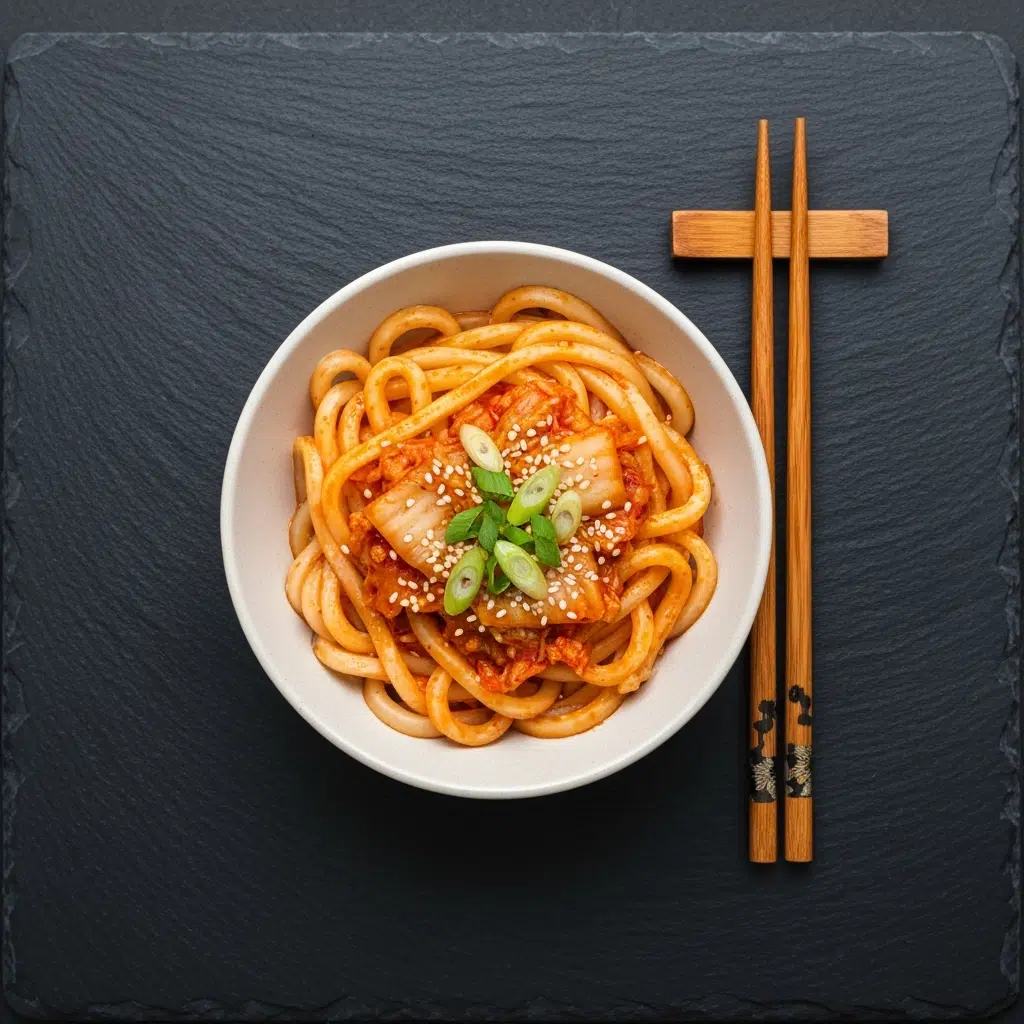
Kimchi Udon Ingredients
The beauty of this kimchi udon lies in its simplicity. You likely have most of these ingredients in your pantry already, and the few specialty items are worth keeping on hand for countless Korean-inspired dishes.
- 14 ounces udon noodles (fresh, frozen, or dried)
- 1 cup kimchi, chopped into bite-sized pieces
- 2 tablespoons kimchi juice (from the jar)
- 1 tablespoon gochujang (Korean chili paste)
- 2 tablespoons soy sauce (or tamari for gluten-free)
- 1 tablespoon sesame oil
- 1 teaspoon sugar or honey
- 2 cloves garlic, minced
- 1 tablespoon vegetable oil
- 2 green onions, sliced
- 1 tablespoon toasted sesame seeds
- Optional: fried egg, sliced nori, or protein of choice
Kimchi Udon Timing
Prep time: 5 minutes | Cook time: 10 minutes | Total time: 15 minutes
Step-by-Step Kimchi Udon Instructions
Follow these simple steps for perfect results every time. The key is having everything prepped and ready since the cooking happens quickly.
Step 1: Prepare the Noodles
Cook your udon noodles according to package directions. Fresh or frozen udon typically needs just 2-3 minutes in boiling water, while dried varieties may take longer. Drain well and set aside. If using pre-cooked udon, simply rinse under warm water to separate the noodles.
Step 2: Make the Sauce
In a small bowl, whisk together the gochujang, soy sauce, sesame oil, sugar, and kimchi juice. This creates the flavorful base that will coat every strand of noodle. The kimchi juice adds that signature tangy depth that makes this dish so special.
Step 3: Stir Fry Everything Together
Heat vegetable oil in a large wok or skillet over medium-high heat. Add the minced garlic and stir for 30 seconds until fragrant. Add the chopped kimchi and stir fry for 2-3 minutes until it becomes slightly caramelized around the edges. Pour in the sauce mixture and let it bubble for about a minute. Add the cooked udon noodles and toss everything together until the noodles are evenly coated and heated through, about 2-3 minutes.
Step 4: Finish and Serve
Remove from heat and garnish with sliced green onions and toasted sesame seeds. For an extra treat, top with a perfectly fried egg whose runny yolk creates a luxurious sauce when mixed into the noodles.
Kimchi Udon Nutritional Information
Per serving (without additional protein): Calories: 380 | Protein: 12g | Carbohydrates: 68g | Fat: 8g | Fiber: 5g | Sodium: 980mg. Kimchi provides probiotics for gut health, while udon noodles offer sustained energy.
Equipment Needed for Kimchi Udon
- Large pot for boiling noodles
- Wok or large skillet
- Mixing bowls
- Whisk or fork for combining sauce
- Colander for draining noodles
Why You Will Love This Kimchi Udon Recipe
This dish has earned its permanent spot in my recipe rotation for several reasons. First, it genuinely comes together in 15 minutes flat, making it faster than most delivery options. The combination of chewy udon noodles with tangy, spicy kimchi creates a texture and flavor experience that feels both comforting and exciting. It’s incredibly adaptable—you can add proteins, different vegetables, or adjust the spice level to your preference. Plus, it uses ingredients that keep well, so you can always be prepared for a delicious emergency meal.
If you are exploring different ways to enjoy udon noodles, our creamy gochujang udon noodles offer a rich, comforting variation.
Healthier Alternatives for Kimchi Udon
This recipe is naturally quite adaptable for various dietary needs. For a gluten-free version, use tamari instead of soy sauce and ensure your udon noodles are gluten-free (many rice-based udon options are available). To reduce sodium, use low-sodium soy sauce and rinse your kimchi briefly before using. For a lower-carb option, you can substitute zucchini noodles or shirataki noodles, though the texture will be different. Adding extra vegetables like spinach, mushrooms, or bell peppers boosts the fiber and nutrient content without compromising flavor.
Kimchi Udon Serving Suggestions
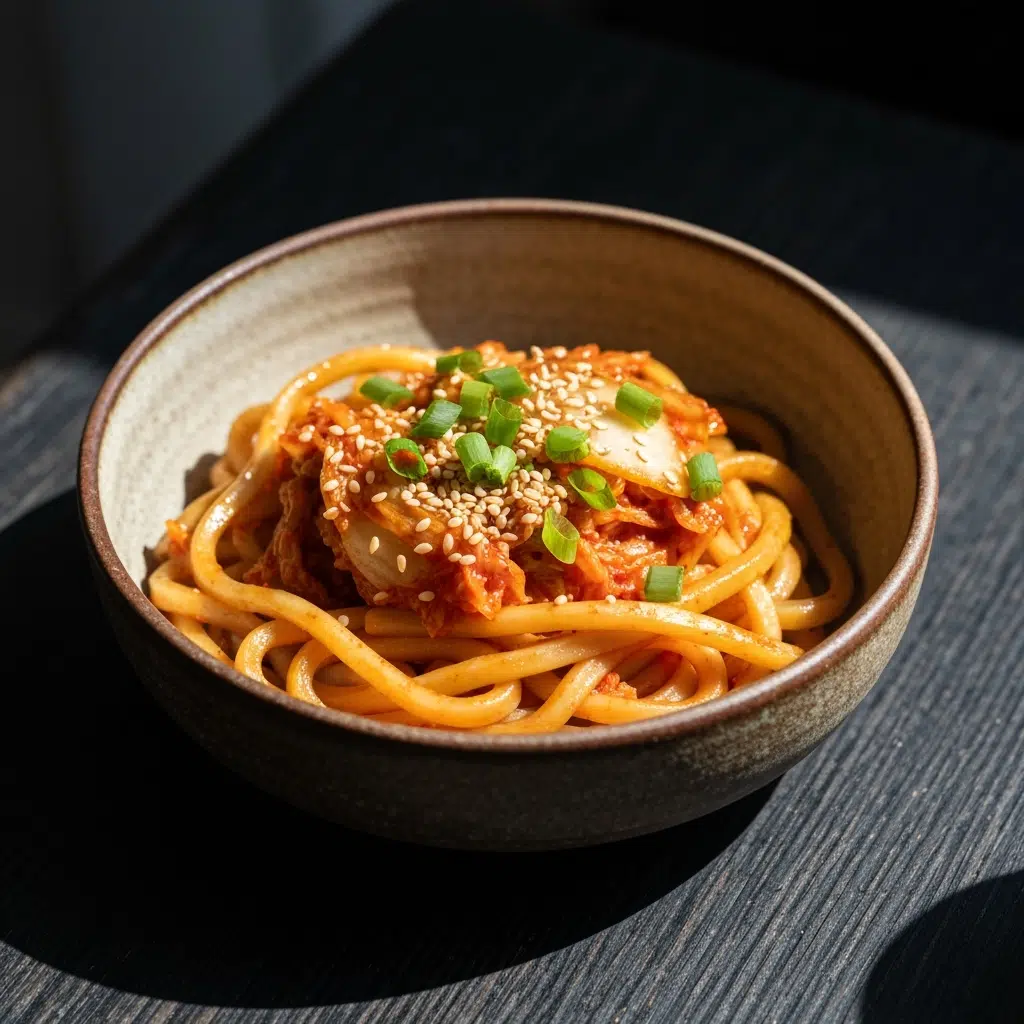
While this kimchi udon is satisfying on its own, it pairs beautifully with simple sides. A crisp cucumber salad provides refreshing contrast to the spicy noodles. For protein, add grilled chicken, shrimp, or tofu directly to the stir fry. If you are serving a crowd, consider making a batch of our Korean gochujang noodles as another flavorful option. Traditional Korean banchan like seasoned bean sprouts or spinach make excellent accompaniments. For drinks, cold beer or iced barley tea balance the spice perfectly.
Common Mistakes to Avoid with Kimchi Udon
The most common error is using fresh, unfermented kimchi. Well-fermented kimchi with its tangy, complex flavor is essential for authentic taste. Another mistake is overcooking the udon noodles during the initial boil—they should be al dente since they will cook further in the sauce. Don’t skip the kimchi juice in the sauce—it carries tremendous flavor. Finally, avoid crowding the pan when stir frying; use a wok or large skillet to ensure everything cooks evenly and gets slightly caramelized.
Storing Tips for Kimchi Udon
Leftover kimchi udon keeps well in an airtight container in the refrigerator for up to 3 days. The noodles will soften over time but remain delicious. To reheat, add a splash of water or broth and warm gently in a skillet over medium heat, stirring frequently. You can also microwave in 30-second intervals, stirring between each. I don’t recommend freezing as the texture of the udon noodles becomes compromised upon thawing.
Kimchi Udon Conclusion
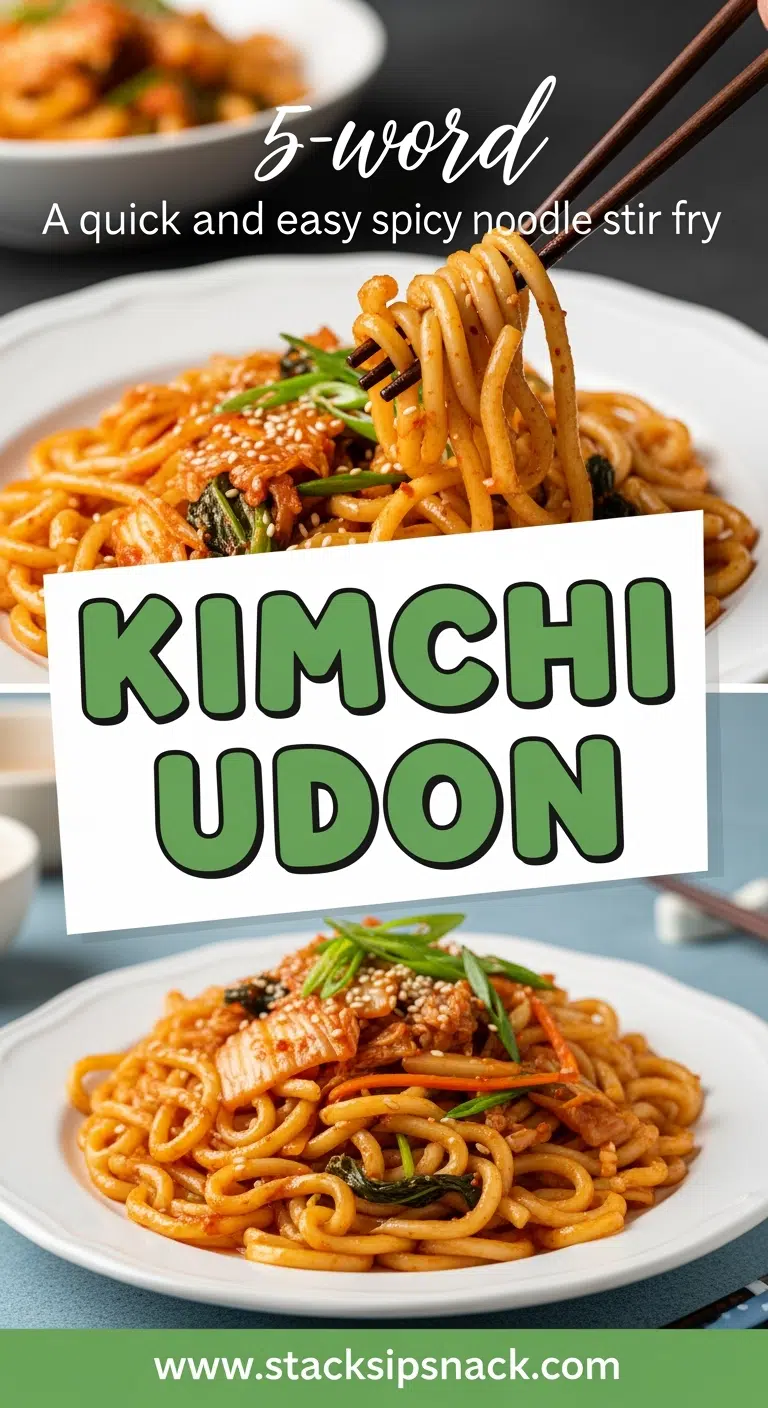
This kimchi udon recipe proves that incredible meals don’t require complicated techniques or hard-to-find ingredients. In just 15 minutes, you can create a dish that’s packed with umami, spice, and satisfying textures. It’s become my secret weapon for busy weeknights, unexpected guests, and those times when I simply crave something delicious without the fuss. The versatility means you can make it differently each time based on what you have available. If you are looking for another quick noodle dish with similar flavors, try our peanut gochujang udon for a nutty twist.
I would love to hear how your kimchi udon turns out. What variations did you try? Share your creations and tag @Stacksipsnack on Pinterest so I can see your delicious results
FAQs about kimchi udon
Is kimchi udon good?
Kimchi udon is widely enjoyed for its rich, savory, and spicy flavor profile. The chewy udon noodles complement the fermented tang of kimchi, creating a satisfying and comforting dish popular in Korean and fusion cuisine.
What does kimchi udon taste like?
It offers a complex blend of sour, spicy, umami, and slightly sweet flavors. The broth is often savory with a kick from the gochugaru (Korean chili flakes) in kimchi, while the udon noodles provide a neutral, chewy texture that absorbs the bold flavors.
How spicy is kimchi udon?
The spiciness of kimchi udon can vary significantly based on the type and amount of kimchi used, as well as any added gochujang or gochugaru. Generally, it has a moderate to noticeable kick, but it can be adjusted to individual preference.
What kind of noodles are best with kimchi?
Udon noodles are excellent with kimchi due to their thick, chewy texture that holds up well in flavorful broths. Other great options include ramen noodles, glass noodles (japchae style), or even thin vermicelli, depending on the desired dish consistency.
What are the ingredients in kimchi udon?
Key ingredients typically include udon noodles, fermented kimchi (often sautéed), a broth base (such as anchovy, vegetable, or chicken stock), and aromatics like garlic and ginger. Common additions include pork belly, tofu, mushrooms, green onions, and a soft-boiled egg.
Is kimchi udon healthy?
Kimchi udon can be part of a healthy diet, especially when homemade. Kimchi provides probiotics and vitamins, while udon offers carbohydrates for energy. Its healthfulness depends on portion size, ingredients (e.g., lean protein, fresh vegetables), and sodium content.
kimchi udon

There's something deeply comforting about a bowl of noodles that comes together in minutes but tastes like it took hours. This kimchi udon recipe is my go-to when life gets busy but my taste buds demand something extraordinary. It's the kind of dish that proves you don't need fancy ingredients or complicated techniques to create something truly delicious.
- Prep Time: 5 minutes
- Cook Time: 10 minutes
- Total Time: 15 minutes
- Yield: 2 servings 1x
- Category: Main Course
- Method: Stir-frying
- Cuisine: Korean
Ingredients
- 14 ounces udon noodles (fresh, frozen, or dried)
- 1 cup kimchi, chopped into bite-sized pieces
- 2 tablespoons kimchi juice (from the jar)
- 1 tablespoon gochujang (Korean chili paste)
- 2 tablespoons soy sauce (or tamari for gluten-free)
- 1 tablespoon sesame oil
- 1 teaspoon sugar or honey
- 2 cloves garlic, minced
- 1 tablespoon vegetable oil
- 2 green onions, sliced
- 1 tablespoon toasted sesame seeds
- Optional: fried egg, sliced nori, or protein of choice
Instructions
- Prepare the Noodles: Cook your udon noodles according to package directions. Drain well and set aside.
- Make the Sauce: In a small bowl, whisk together the gochujang, soy sauce, sesame oil, sugar, and kimchi juice.
- Stir Fry Everything Together: Heat vegetable oil in a large wok or skillet over medium-high heat. Add the minced garlic and stir for 30 seconds until fragrant. Add the chopped kimchi and stir fry for 2-3 minutes until it becomes slightly caramelized around the edges. Pour in the sauce mixture and let it bubble for about a minute. Add the cooked udon noodles and toss everything together until the noodles are evenly coated and heated through, about 2-3 minutes.
- Finish and Serve: Remove from heat and garnish with sliced green onions and toasted sesame seeds. For an extra treat, top with a perfectly fried egg.
Notes
Leftover kimchi udon keeps well in an airtight container in the refrigerator for up to 3 days. To reheat, add a splash of water or broth and warm gently in a skillet over medium heat. The most common error is using fresh, unfermented kimchi. Well-fermented kimchi with its tangy, complex flavor is essential for authentic taste.
Nutrition
- Serving Size: 1 serving
- Calories: 380
- Sugar: 8g
- Sodium: 980mg
- Fat: 8g
- Saturated Fat: 1g
- Unsaturated Fat: 5g
- Trans Fat: 0g
- Carbohydrates: 68g
- Fiber: 5g
- Protein: 12g
- Cholesterol: 0mg
💬 Let’s Stay Connected!
For daily recipes, kitchen tips, and exclusive content, follow me on:
👉 Facebook for behind-the-scenes & community fun
👉 Pinterest for visual inspiration & meal ideas
👉 X (Twitter) for quick tips & trending recipes
📲 Join the flavor journey, your next favorite recipe is just a follow away!